
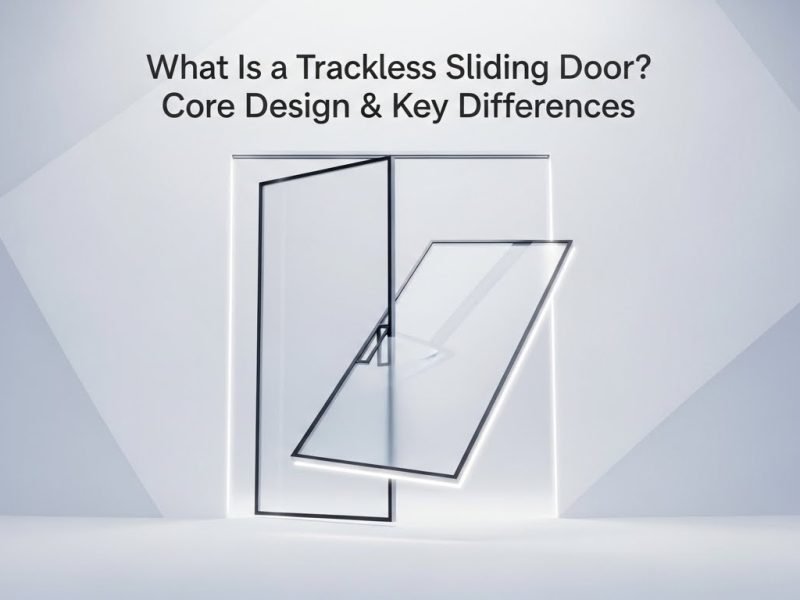
A trackless sliding door is a modern interior door system designed to glide smoothly without the traditional floor track. Instead of bottom rails, it relies entirely on upper-side rollers and concealed guiding mechanisms to allow movement. This design creates a clean, seamless look and eliminates the tripping hazards normally associated with floor tracks. Trackless sliding doors are especially popular in contemporary homes, offices, boutique stores, and minimalist spaces where aesthetics and accessibility matter.
Key Differences Between Trackless & Traditional Sliding Doors
Traditional sliding doors depend on both an upper rail and a bottom track for stability. Trackless lifting sliding doors eliminate the lower track completely, which changes how the door moves, how it is installed, and where it can be used. While traditional models rely on the floor track to distribute weight, trackless systems place all the load on the upper hardware. This makes trackless doors more visually appealing and easier to clean, but also limits their size, weight, and recommended applications.
Advantages of Trackless Sliding Doors
Safety & Accessibility
Because there is no floor track, trackless sliding doors reduce the risk of tripping and make movement easier for children, elderly individuals, wheelchair users, and anyone with mobility needs. The absence of a bottom rail also keeps doorways open and obstacle-free, which is ideal for homes focused on accessibility and modern safety standards.
Easy Cleaning & Aesthetics
One of the biggest selling points is the elegant appearance and easy maintenance. Without a floor track collecting dust, debris, or spills, cleaning becomes much quicker. The minimalist profile blends seamlessly with modern interiors, giving rooms a sleek, uninterrupted floor line. This makes trackless doors perfect for high-end residential spaces, galleries, and offices where visuals matter.
Flexibility for Uneven Floors
Trackless sliding doors can be installed on uneven flooring where traditional tracks would fail. Because they rely on top-mounted systems, they work well in older houses, spaces with tiled transitions, or rooms where leveling a new track would be difficult. This adds valuable flexibility for renovations and tricky architectural spaces.
Critical Limitations to Consider
Durability Trails Traditional Models
Since the upper hardware supports all the weight, Raluminum trackless systems generally wear out faster than dual-track traditional models. The roller mechanisms and wall mounts experience more stress and may require frequent maintenance or eventual replacement.
Strict Size & Weight Restrictions
Trackless sliding doors cannot support heavy or oversized door panels. Glass doors, thick wood panels, or large room dividers often exceed the safe weight limit for trackless systems. This makes them suitable for moderate-sized interior doors but not for large spans or heavy materials.
Complex & Costly Installation
Installing a trackless door requires precise alignment, reinforced mounting surfaces, and professional expertise. Because there are no bottom rails to stabilize the panel, installers must ensure perfect structural support from above. This increases labor cost and makes DIY installation impractical.
Unsuitable for Outdoor Use (Poor Weather Resistance)
Trackless sliding doors are not designed for exterior applications. Without a bottom track, they lack the sealing ability and stability needed to withstand wind, rain, dust, or temperature fluctuations. They are strictly for indoor spaces and not recommended for patios, balconies, or exterior entrances.
How to Choose a Trackless Sliding Door: Key Criteria
Assess Your Space’s Structural Capacity
Trackless doors put a significant load on upper mounts. Before choosing one, confirm that your wall or ceiling can support the hardware. Reinforcement may be required for safe and long-lasting installation.
Match Door Size to Hardware Capacity
Carefully compare the door panel’s weight and dimensions with the hardware specifications. Avoid pushing the system to its maximum limits; choosing a lighter door ensures smoother operation and better durability.
Prioritize High-Quality Hardware
Since the entire system relies on top-mounted rollers and guides, poor-quality hardware will fail quickly. Opt for premium, reinforced metal components, smooth roller systems, and reliable brand warranties.
Consider Indoor-Only Use Cases
Trackless sliding doors should only be used inside. Ideal applications include bedrooms, closets, offices, meeting rooms, bathrooms (with proper ventilation), and partitions in living spaces. Avoid exterior installation entirely.
How to Tell If a Trackless Sliding Door Is Right for You
A trackless sliding door is a smart choice if you want a modern, minimalist look, easier cleaning, and improved accessibility—and your space can structurally support the door’s weight. It works best for interior applications where you need a smooth, uninterrupted floor line and light-to-medium weight door panels. However, if you need maximum durability, large door spans, outdoor installation, or cost-effective hardware, a traditional sliding door may be the better option. Evaluate your room size, material preference, structural strength, and usage needs to determine whether a trackless sliding door meets your expectations.